
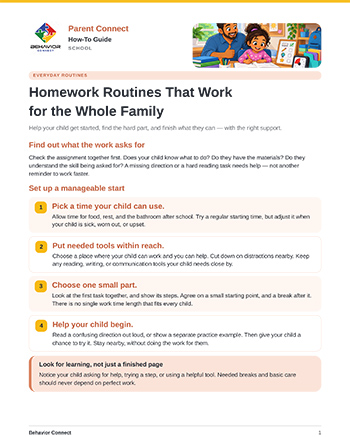
Establishing a predictable homework routine involves setting up a distraction-free workspace, using visual timers, breaking assignments into manageable chunks, and incorporating planned sensory breaks.
For many families, the after-school hours are a minefield of fatigue, meltdowns, and homework resistance. Implementing a structured routine helps reduce cognitive overload and makes learning time peaceful.
Strategies to Build a Better Routine
- Create a Dedicated Station: Set up a consistent, quiet workspace away from high-traffic household areas, stocked with necessary supplies so your child doesn’t use gathering materials as an avoidance tactic.
- Build in Transition Time: Never transition straight from the school bus or front door into homework. Provide a 20 to 30-minute decompression window with a snack, heavy work, or preferred play.
- Chunk Assignments: Break large worksheets into smaller sections. Use a visual timer (like a Time Timer) to show that work happens for a short, predictable burst followed by a quick reinforcement break.
- Use Positive Reinforcement: Praise effort and task completion enthusiastically, utilizing token economies or small rewards if needed.
Additional Reading
Want to dive deeper?
Grab our comprehensive companion article for extra background details and broader perspective on what you just read.